
Article
Why the Energy Metaverse Is More Relevant Today Than Ever Before
The terminology may vary, but the Energy Metaverse is taking shape as digital twins, simulation, robotics, AI and connected data converge across the energy sector.
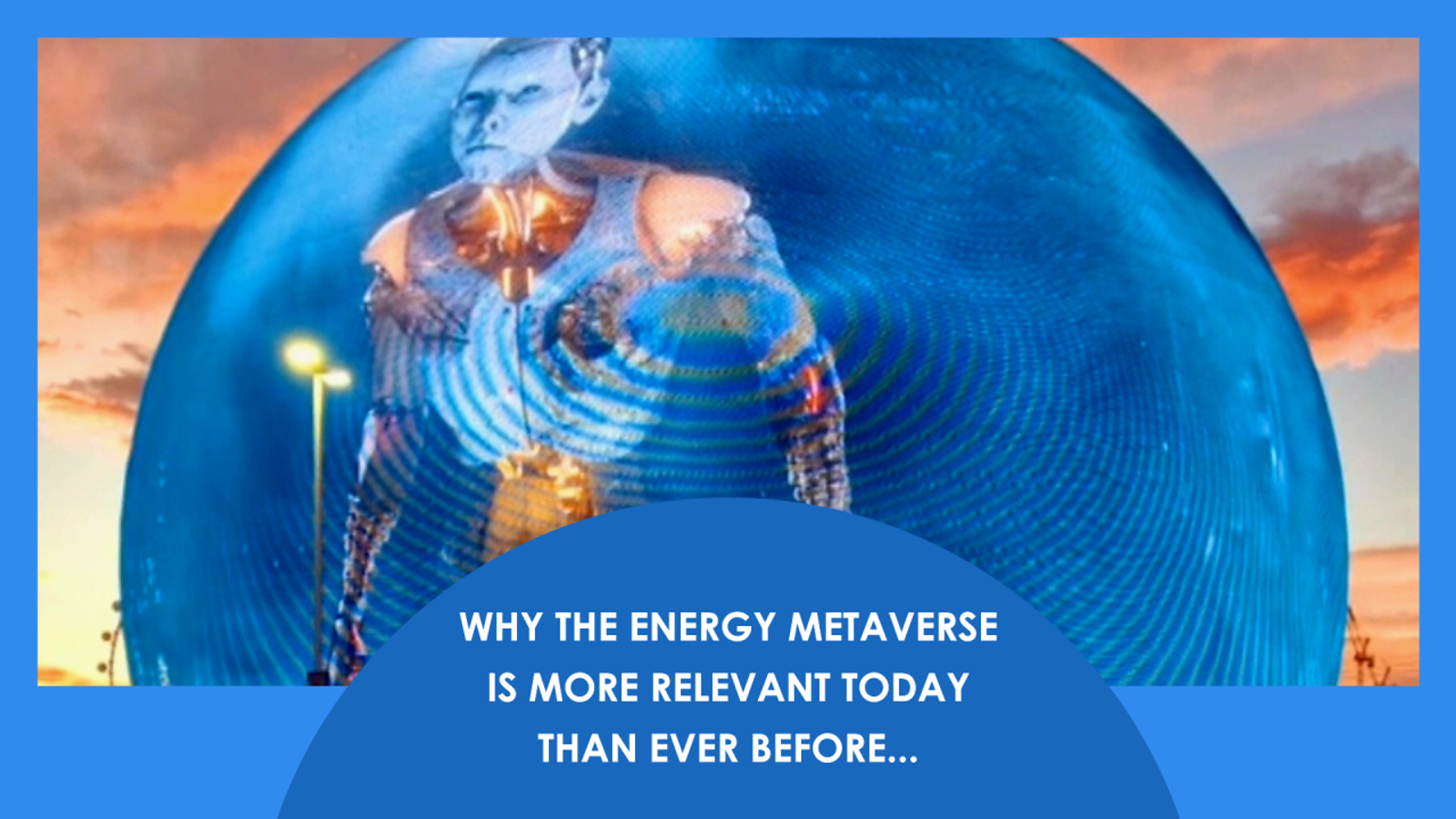 Image: Photo from the Sphere 2026
Alright, let’s rewind a bit. It’s coming up on almost four years since I first started talking about the Energy Metaverse. Back then, the term felt like a bit of a futuristic dream. Many of ye thought I was mad, and some of ye probably still do. 😉
But just look at the pace of technological change these days, with next-gen tech and innovations around compute platforms, edge compute, digital twins, reality capture, 3D models, XR, simulation, spatial computing, Gen AI and so on. The tech capabilities we have today are truly impressive. And as we combine more and more of these technologies, we’re simply accelerating the pace at which we’re building the Energy Metaverse.
What do I mean by that?
Well, the core idea behind the Energy Metaverse was always about creating a connected digital ecosystem that brings together all relevant data, breaks down data silos, creates systems of systems, enables simulation and automation, and supports more collaborative, immersive experiences.
All with the goal of transforming our existing processes and workflows to drive efficiencies, optimise performance and enable all sorts of innovation right across the energy sector. And these fundamentals haven’t changed at all.
Neither have the strategic energy challenges we’ve been facing for years. Political and geopolitical “fun and games” are still there, and getting worse. The challenge of securing financing, all sorts of supply chain shocks and global labour force struggles are all still real, tough issues in 2025.
Then throw in the pressure to keep up with new technologies to remain competitive while simultaneously keeping the lights on and remaining economically viable.
And I honestly believe that whether you’re in oil and gas, renewables, LNG, hydrogen, batteries, geothermal, fusion, electrification, nuclear, grid, hydro or beyond, everyone in the energy sector is navigating a perfect storm of innovation and pressure.
While the business reasons, the financials and the politics of it all may be very different across sectors and regions, the digital technologies are the same for all, as are the laws of physics.
But Kev, the “Metaverse” is dead
As I’ve been saying for years, you might not like the term Metaverse. You might prefer to use Digital Twin, Virtual Twin, Industrial Metaverse, Spatial Computing, Immersive Experiences, Virtual Factory, Industry 4.0, Autonomous Facility, Autonomous Grid, Human-Centric Workplace—and the list goes on.
But here’s the thing: regardless of which term you prefer, it’s because of the combination of all the enabling technologies, tools, platforms and capabilities that we’re able to integrate, analyse and act on data in ways we could only dream of just a few years ago.
Personally, I’m still a fan of the term “Metaverse”. In my opinion, it’s the best way to describe the journey we’re on. It’s digital meets the real world on steroids. It’s connected and in real time. It breaks down data silos, enables all sorts of “what if” simulations, facilitates autonomous operations, and provides collaborative and immersive experiences.
So, is this easy?
Nope!
The characteristics I’ve been calling out for years in presentations and blogs aren’t just still valid—they’re more important than ever. And challenges such as interoperability, complexity and cybersecurity haven’t gone away.
Of course, us “humans” have a huge role to play in all this. As we break down those data silos and become more open in how we work, it’s going to change how we collaborate. And let’s face it—humans aren’t always great at change.
So, a human-centric approach will be key moving forward. Making the transition smooth, effective and accepted is going to be crucial, but hard.
Building new versus brownfield
As I’ve been saying for a while, the Energy Metaverse really starts to shine when you’re building something brand new: a gigafactory, a new LNG terminal, a hydrogen plant, or massive wind or solar mega-installations.
Doing everything digitally first—designing, simulating, integrating data and operating as you go—is like laying the perfect foundation before the first brick is even laid. That’s the sweet spot.
When it comes to brownfield sites, the challenges shift. You’re working with existing structures and systems, and it’s a different set of problems to solve.
But don’t be fooled—brownfield sites are also huge opportunities. Applying those same cutting-edge digital tools can make even the most complex existing systems more efficient, sustainable and adaptable. And people are already doing it. Just look at what folks are doing with reality capture technologies today.
Looking ahead in 2025
So, what’s next? Well, let me put it this way: it’s time to double down and do this properly. No more waiting for things to fall into place. The technologies are here, the pace is accelerating, and now it’s all about taking it to the next level.
Yeah, Kev, easy for you to say…
Well, how many of ye have already been directed to figure out what AI can do in your company? You’ll have to break down those data silos anyway to train your AIs.
So whatever term you use—Energy Metaverse, Industrial Metaverse, Digital Twin or whatever else—you’re going to be doing a lot of this groundwork in 2025. It’s inevitable.
So buckle up, folks. This is just the beginning, and trust me, we’re in for a wild ride.
My plan for 2025
Alright, I’ll admit it upfront: I’ve been pretty bad at keeping up with regular editions of this newsletter, as the 3,000-plus of you who signed up can attest. It’s not that I don’t have things to say—because, as ye know, I always do! 🤓
It’s just that with all the stuff going on, events and a million other priorities—who isn’t juggling a ton of things these days?—publishing my own blog posts kept slipping further and further down my to-do list.
But now, having returned from CES—yes, it was crazy but fun—and with 2025 officially in full swing, it’s time to do better.
So, here’s my plan: at least two to three editions of this newsletter per month. And with a bit of help from my “colleague” ChatGPT, I’m confident I’ll stay on track. I’ve got four drafts ready to go!
Something new-ish: a Tech Scout email newsletter
In the past few years, many folks have asked me to regularly summarise my thoughts on the potential implications of some of the cool stuff I come across. While I do post a lot of stuff, no one has the time to read it all, so many of ye want a summary.
Thus, I’ll be rolling out something new for me in the next week or so—an email newsletter with a bit more of a Tech Scout focus.
I’ll share a summary of the cool stuff I come across—be it new tech, emerging trends or interesting breakthroughs—and, more importantly, my own thoughts on the potential implications these may have. You know, the stuff that might make you go, “Hmm, now that could be a game-changer…”
Take care,
Kev.