
Article
The Industrial Metaverse: 10 Statements to Mull Over
Ten thoughts on why the Industrial Metaverse may be closer than many think, with digital twins, simulation, infrastructure and workflow change all central to what happens next.
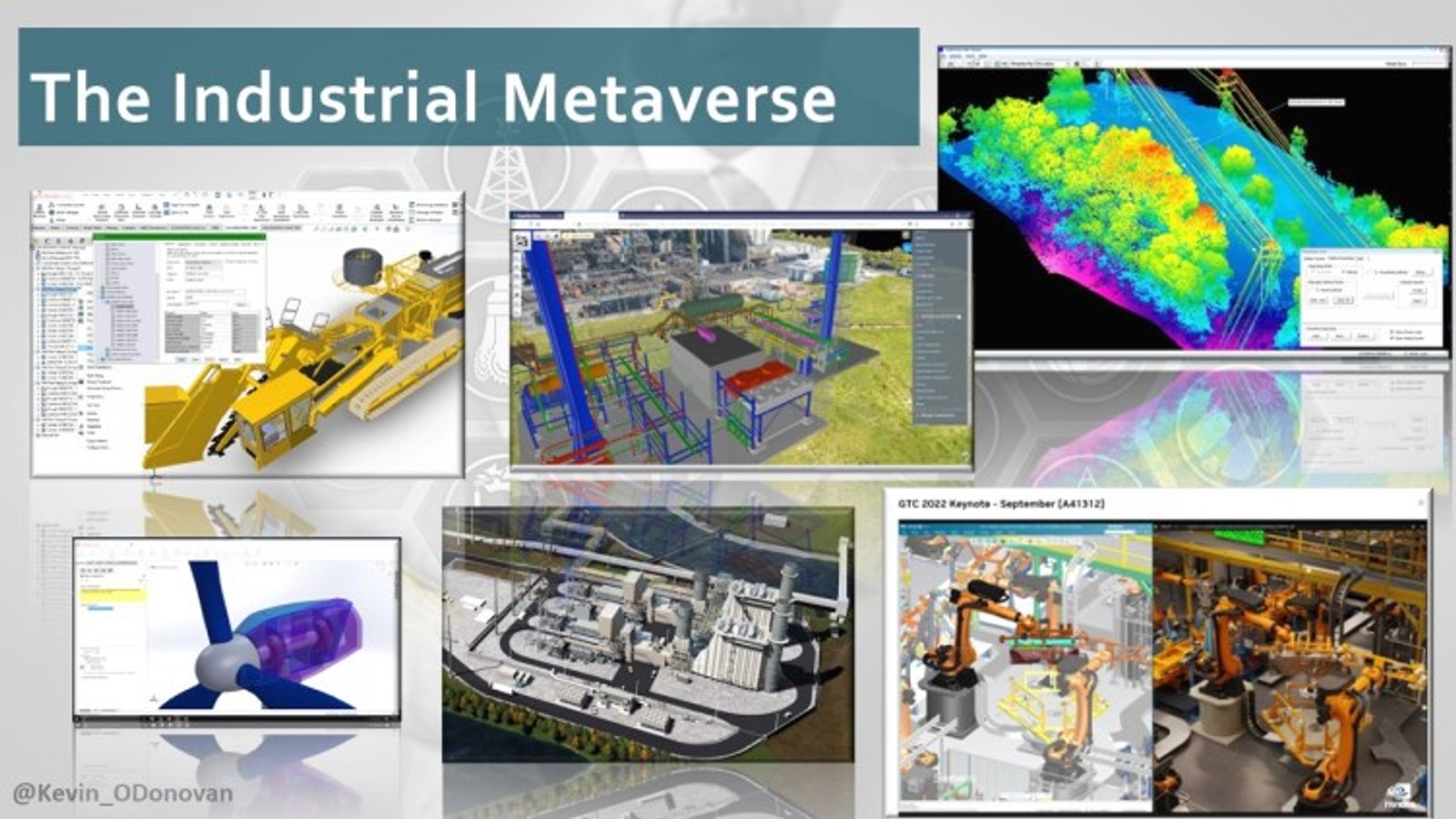
It was over a year ago that I started talking to folks about how the Metaverse could play out across industry, especially in the energy industry.
Not a week goes by today when we do not see multiple Industrial Metaverse-related announcements. It was a hot topic during NVIDIA’s recent GTC22, and last week at the VRARA Immerse Summit Europe, it was great to hear from the likes of Unity, Magic Leap, Lenovo and many others on how they see this playing out across various industries.
Given there is so much going on, one could easily write a book. But instead of trying to write a book, here is my list of 10 Industrial Metaverse statements for ye all to mull over.
10 statements to mull over
The Industrial Metaverse is a lot closer than many people think. While Gartner has Metaverse at a 10-plus-year horizon on its latest 2022 New Tech Hype Cycle, NVIDIA has been surprised by the number of industrial companies already well down the path.
The Industrial Metaverse is being enabled by the convergence of many technologies, with digital twin technology as the key enabler.
While the Industrial Metaverse is on full hype these days, remember that this is simply the next stage of digitalisation.
The real value of all this is in the simulation, not the animation.
Simulation standards will be key for interoperability and consistency. Hence the focus on Universal Scene Description, or USD. Yet USD will never be able to allow for every industrial use case or requirement. It would collapse under its own weight.
Given the goal is to have real-time, immersive 3D simulations of entire factories, we will need to rethink the IT infrastructure required to make this all work. While real-time ray tracing in the cloud is here, the speed of light is still only so fast. We will need a lot more edge compute to meet the required computational and graphical demands.
While immersive VR and AR experiences will become common, and the ability to teleport around a factory will be cool, you do not have to be off in a photorealistic, immersive virtual reality world to get business value today. And remember, immersive means different things to different people.
Industry typically sells physical things: a robot, a machine, a wind turbine and so on. Well, why not sell the digital twin as a product in its own right, without the physical asset? Others will use them in their simulations. This will open up all sorts of new business opportunities around virtual industrial assets.
Industrial Metaverse solutions will look very different from Consumer Metaverse solutions, both in the use cases and the underlying infrastructure. Plus, the complexity of an industrial virtual world is way beyond that of a consumer one today.
Like any digitalisation project, Industrial Metaverse technologies will need to integrate into existing workflows and will also force us to re-examine those workflows. This will lead to a lot of change, and sometimes we humans dislike change.
Bridging the gap
Anyway, in my opinion, the Industrial Metaverse is happening, and it may be a lot closer than we all think.
However, we need to do a way better job of bridging the gap between the art of the possible and what is feasible to do today, so every company understands that it too can participate and no one gets left behind.
But that is a topic for another day.
Kev.